GHK-Cu vs Matrixyl
Head-to-head comparison of GHK-Cu and Matrixyl (Palmitoyl Pentapeptide-4) for skin anti-aging, collagen synthesis, and wrinkle reduction.
GHK-Cu and Matrixyl are the two most researched peptides for topical skin anti-aging. GHK-Cu is a copper-binding tripeptide with broad gene expression effects; Matrixyl (Palmitoyl Pentapeptide-4) is a lipopeptide that signals the skin to produce more collagen and hyaluronic acid. Both are effective, but they work through different mechanisms and have different strengths.
Our Verdict
Winner: GHK-Cu
GHK-Cu has the stronger scientific backing and broader mechanism — it activates over 4,000 genes involved in skin repair, not just collagen synthesis. For researchers looking for the most comprehensive anti-aging peptide, GHK-Cu is the stronger choice. Matrixyl is an excellent option for those who prefer a well-studied, cosmetically elegant topical ingredient with a long track record in commercial skincare.
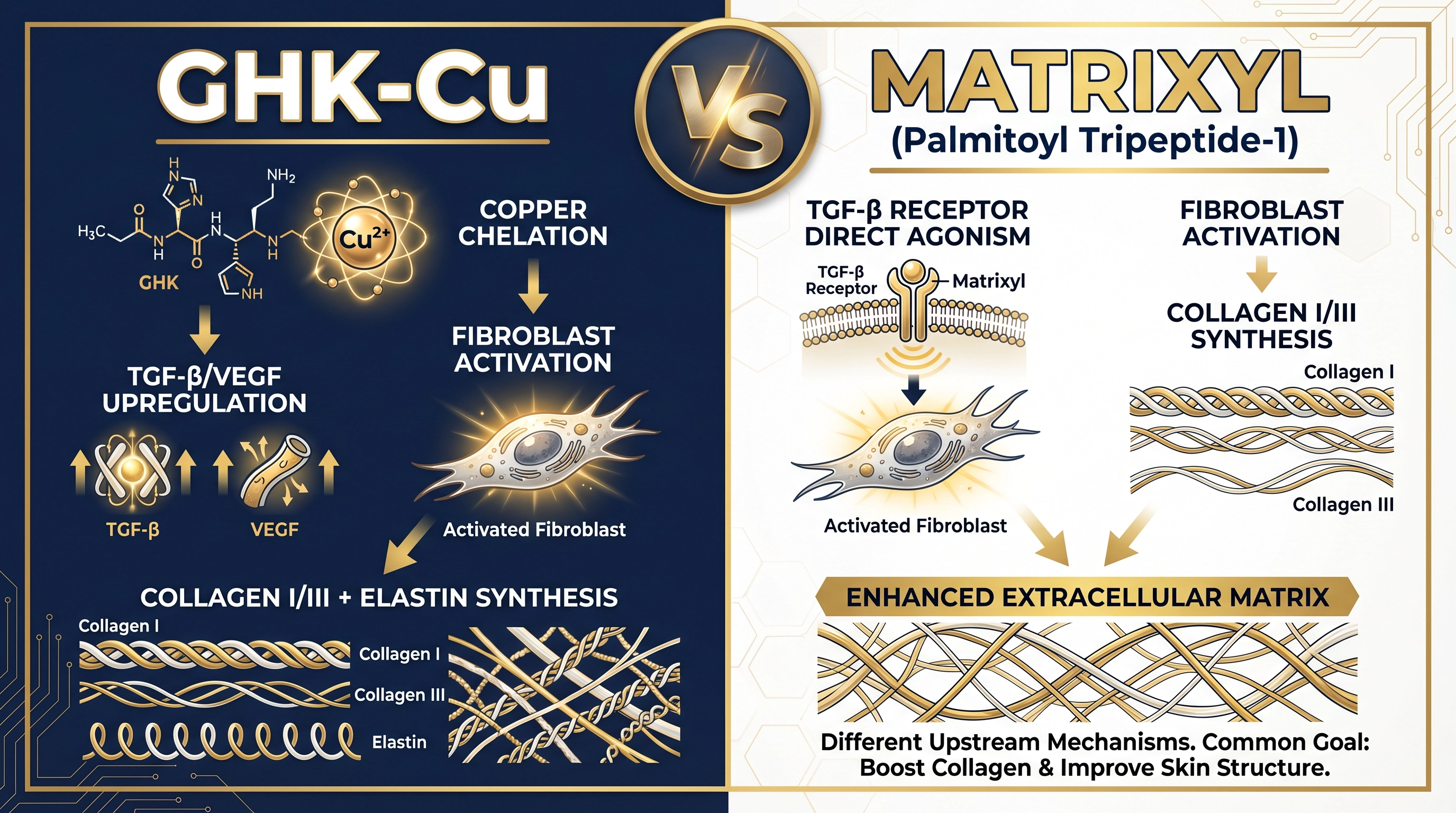
Pathway Comparison Diagram
GHK-Cu chelates copper to upregulate TGF-β/VEGF and stimulate collagen I/III + elastin; Matrixyl directly agonizes the TGF-β receptor to activate fibroblasts — different upstream mechanisms, same collagen synthesis outcome.
GHK-Cu vs Matrixyl: Side-by-Side
| Category | GHK-Cu | Matrixyl |
|---|---|---|
| Type | Copper-binding tripeptide (injectable or topical) | Lipopeptide (topical only) |
| Mechanism | Activates 4,000+ genes; collagen I/III, elastin, HA | Signals fibroblasts to produce collagen and HA |
| Administration | Topical or subQ injection | Topical only |
| Collagen Synthesis | Strong (multiple collagen types) | Strong (primarily collagen I) |
| Anti-inflammatory | Yes — significant anti-inflammatory activity | Minimal |
| Wound Healing | Yes — accelerates tissue repair | Minimal |
| Research Depth | Extensive — hundreds of studies | Moderate — primarily cosmetic research |
| Cost | Moderate (injectable grade more expensive) | Low (widely available in cosmetics) |
Source Both Peptides at Purgo Labs
Purgo Labs carries pharmaceutical-grade GHK-Cu and Matrixyl with third-party COAs. Use code HEALTH for 20% off.
Frequently Asked Questions
Can I use GHK-Cu and Matrixyl together?
Yes — they work through complementary mechanisms and can be combined in topical formulations. GHK-Cu provides the broader repair signal while Matrixyl adds targeted collagen synthesis stimulation.
Which is better for wrinkles: GHK-Cu or Matrixyl?
Both reduce fine lines and wrinkles through collagen synthesis. GHK-Cu has a broader mechanism and also improves skin texture, elasticity, and barrier function. Matrixyl is more targeted to collagen I production.
Is GHK-Cu safe for daily topical use?
Yes — GHK-Cu has an excellent safety profile for topical use. Copper is an essential trace mineral and the concentrations used in skincare (0.5–2%) are well within safe ranges.
Calculate Your Exact Dose
Use our free peptide calculator to convert your dose into exact syringe units based on your vial concentration.
Related Resources
Related Guides
Ready to Start Your Research?
Purgo Labs provides pharmaceutical-grade research peptides with third-party COAs. Use code HEALTH for 20% off your first order.
Visit Purgo Labs