Telomerase Activation & Epigenetic Anti-Aging
Epithalon (Epitalon) — Tetrapeptide Telomere Regulator
Epithalon (also spelled Epitalon) is a synthetic tetrapeptide with the sequence Ala-Glu-Asp-Gly, developed by Professor Vladimir Khavinson at the St. Petersburg Institute of Bioregulation and Gerontology in Russia. It is a synthetic analog of epithalamin, a natural peptide extract from the pineal gland that was observed to have life-extension properties in early Soviet-era animal research.
Epithalon has generated significant scientific interest due to its reported capacity to activate telomerase — the enzyme responsible for maintaining telomere length — in somatic cells. Telomere shortening is a fundamental mechanism of cellular aging, and the ability to modulate telomerase activity has profound implications for aging research. Khavinson's group has published extensively on epithalon's effects across multiple species and organ systems over more than three decades.
Epithalon is a tetrapeptide with the sequence Ala-Glu-Asp-Gly (AEDG), with a molecular weight of 390.35 Daltons. Despite its extremely small size — just four amino acids — it has been reported to exert significant biological effects in preclinical models, a finding that has been both celebrated and scrutinized in the research community.
The peptide is structurally simple and chemically stable, with no unusual amino acid modifications. Its small size facilitates cellular uptake and potential nuclear localization, which may be relevant to its reported effects on gene expression and chromatin structure.
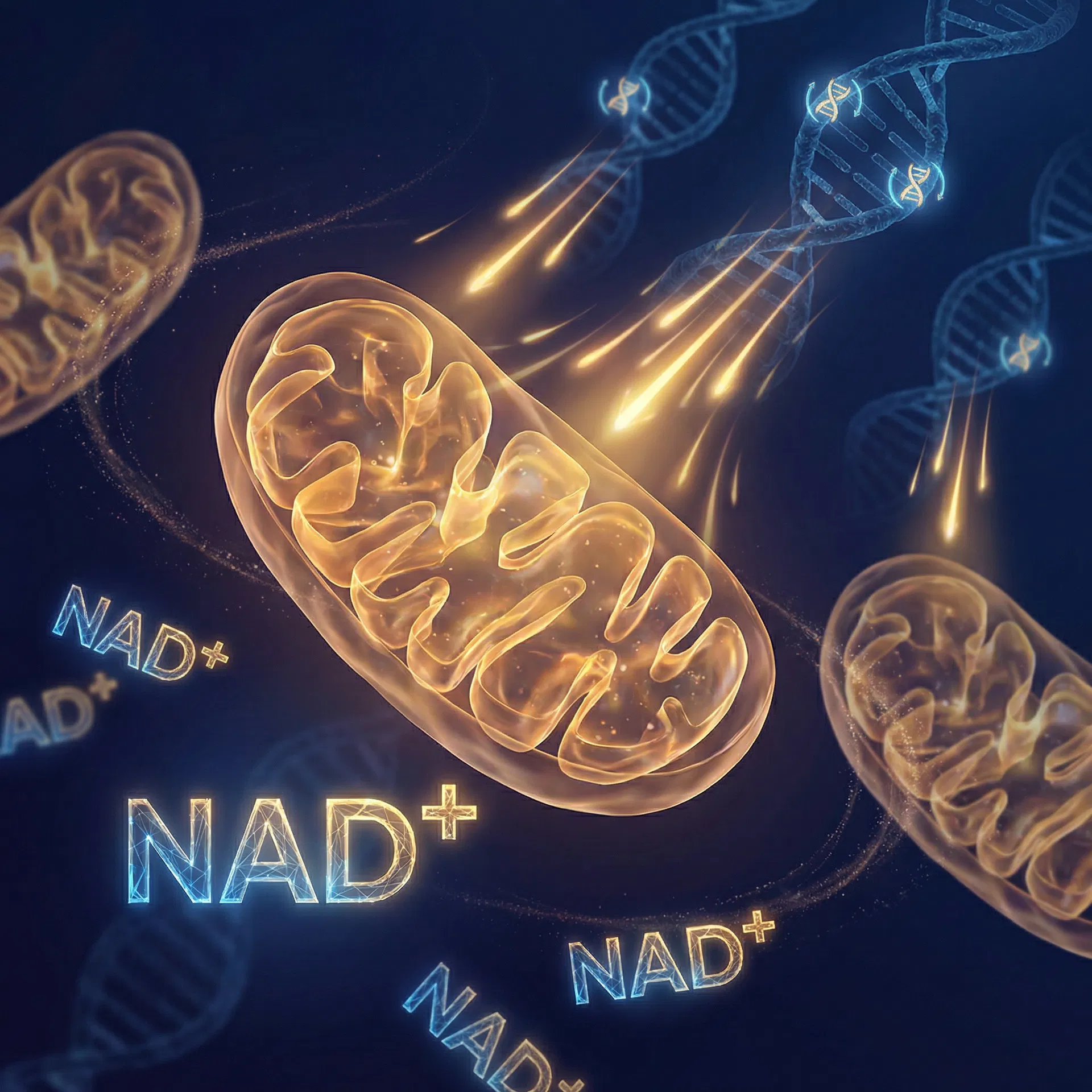
The primary mechanism attributed to epithalon in the research literature is the activation of telomerase (telomerase reverse transcriptase, TERT) in somatic cells. Telomerase is normally active only in germline cells, stem cells, and cancer cells; its reactivation in somatic cells could theoretically extend replicative lifespan by maintaining telomere length.
Khavinson et al. (2003) reported that epithalon increased telomerase activity in human fetal fibroblasts and extended their replicative lifespan beyond the normal Hayflick limit. Subsequent studies from the same group reported epigenetic effects, including chromatin remodeling and changes in histone acetylation patterns, suggesting that epithalon may act as an epigenetic regulator rather than a direct telomerase activator.
Additional reported mechanisms include antioxidant activity, melatonin synthesis regulation via the pineal gland, and modulation of neuroendocrine function.
Epithalon (also spelled Epitalon) is a synthetic tetrapeptide — just four amino acids — derived from a natural protein called epithalamin that's produced by the pineal gland. It's one of the most studied longevity peptides in the Russian scientific literature, with research dating back to the 1980s from the St. Petersburg Institute of Bioregulation and Gerontology.
Epithalon's primary studied mechanism is the activation of telomerase — the enzyme that maintains and lengthens telomeres, the protective caps on the ends of your chromosomes. Telomeres shorten every time a cell divides, and when they get too short, the cell stops dividing (senescence) or dies. Telomere shortening is one of the most well-established biological markers of aging. Epithalon has been shown in cell culture and animal studies to activate telomerase and extend telomere length. It also appears to regulate melatonin production and circadian rhythm function through the pineal gland.
Telomere biology is a Nobel Prize-winning field (Elizabeth Blackburn, 2009) and one of the most credible theories of biological aging. A compound that can activate telomerase is of enormous interest to longevity researchers. The Russian research program on Epithalon is unusually extensive for a peptide of this type, including some of the longest-running animal longevity studies in the literature.
Epithalon is the most telomerase-focused compound in this catalog. Its four-amino-acid simplicity belies a potentially profound mechanism — if its telomerase activation effects translate robustly to human biology, it would represent one of the most direct anti-aging interventions studied to date. It is a research-only compound with the majority of its evidence base in the Russian scientific literature.
Reported activation of telomerase reverse transcriptase in somatic cells, potentially extending replicative lifespan by maintaining telomere length.
Modulates histone acetylation and chromatin structure, potentially resetting age-related epigenetic drift.
Reduces lipid peroxidation and oxidative stress markers in aging animal models, contributing to cellular longevity.
Modulates pineal gland function and melatonin synthesis, with downstream effects on circadian rhythm and neuroendocrine aging.
2 cited studies — model, sample size, outcome, and effect size from published literature.
| Study | Model | Sample | Outcome | Effect Size | Level |
|---|---|---|---|---|---|
Khavinson VK, et al. (2003) Epithalon peptide induces telomerase activity and telomere elongation in human s… PubMed | Human somatic cells — in vitro | In vitro | Telomerase activation and telomere elongation in human fetal fibroblasts | Telomere length increase: ~33% after 44 passages vs. control | In Vitro |
Anisimov VN, et al. (2003) Effect of Epitalon on biomarkers of aging, life span and spontaneous tumor incid… PubMed | Rodent (mouse) — longevity study | n=200 | Extended mean lifespan; reduced spontaneous tumor incidence | Lifespan extension: ~13% vs. control; tumor incidence reduction: ~2.5× | Animal |
Longevity Research
≥99% purity · Third-party tested
Use code Health for 15% off
Fast FedEx shipping · 60-day guarantee
| Peptide Class | Synthetic tetrapeptide (4 amino acids) |
| Molecular Weight | 390.35 Da |
| Amino Acid Sequence | Ala-Glu-Asp-Gly (AEDG) |
| Origin | Synthetic analog of pineal gland epithalamin |
| Available Sizes | 10mg vials |
| Form | Lyophilized powder |
| Purity | ≥99% (third-party tested) |
View full legal status guide →
Purgo Labs offers Epithalon with ≥99% purity, third-party certificates of analysis, and fast FedEx shipping. This is an affiliate link — we may earn a commission at no cost to you.
Purchase Epithalon at Purgo LabsMedical Disclaimer: All content on this site is for educational and research purposes only. Research peptides are not FDA-approved for human use. Always consult a qualified healthcare professional before considering any peptide or supplement protocol. Nothing on this site constitutes medical advice, diagnosis, or treatment.